
A practical framework for organizing tax decisions.
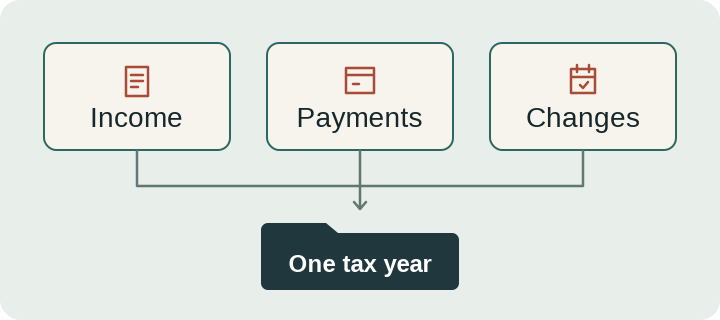
Put your federal and state questions, household changes, and supporting records in one place before making a decision or meeting with a tax professional.
Give federal and state questions separate places
Start with the tax year and the jurisdiction for each question. Federal, state, and sometimes local rules can treat the same income or household change differently. A federal answer can help you identify what to ask about a state return, but check the state’s own guidance for the year and circumstances involved.
For example, if you moved or worked across state lines, create a timeline of where you lived and where you performed work. Include move dates, employer locations, and any tax already withheld for each state. That timeline gives a preparer enough context to identify filing questions and ask for further records.
Gather records that explain what changed
Use the prior year’s returns as an inventory of the documents you once needed. Update the list for new jobs, self-employment, retirement payments, asset sales, a move, or changes in your household. Then compare payer statements with your own records and mark missing or corrected forms. An event timeline can also show which questions touch more than one tax year.
Give each document a name that includes the year, subject, and source. Keep the original alongside any notes about discrepancies. If a record holds sensitive information such as an account number, keep it in a secure folder and share it only through an agreed secure channel.
Understand withholding, deductions, and credits
- Withholding
- Money taken from a payment and sent to a tax authority on your behalf. Keep the figures from wage or other payer statements with the rest of your payment records.
- Deduction
- An eligible amount that reduces income used to calculate tax. The effect depends on the deduction, the rules that apply, and your other facts.
- Credit
- An eligible amount applied against tax under the rules of that credit. Eligibility and what happens to a credit larger than the tax can vary.
When comparing this year with a prior year, look at total tax and payments separately. A refund or balance due reflects the interaction of tax and payments. A change in the amount withheld can change the refund even when the underlying tax is similar.
Turn assumptions into dated questions
Write one question for each issue and attach the record that prompted it. Record the tax year, the date you noted the question, and whether the issue is federal, state, or local. Include the choice you need to make and any upcoming event that affects its timing.
For example, you could ask “I moved in June, and my pay statements show withholding in both states. Which records should I bring so we can determine what I need to file?” A qualified tax professional can assess how current rules apply. Ask about their experience with the jurisdictions or income types in your situation and how they will request documents securely.
Tax records checklist
- Prior federal and state returns and related notices, where relevant.
- Income statements and records of other income, with each source listed.
- Withholding statements and confirmations for other tax payments.
- Investment purchase, sale, and adjustment records, if applicable.
- Documents that may support a deduction or credit you plan to ask about.
- Dates of moves, work changes, and household events that could affect filing.
- A dated question list and an inventory of records you still need to obtain.
When a question is resolved, record the answer, the person or authority you consulted, and the year it applies to. A past answer can be a starting point for a later year.
Tax organization questions
What should I do if I am missing a document?
Check your payer’s records for the correct year and contact the payer through its verified channel. Compare what you receive with your records. If the form stays missing or appears incorrect, ask a qualified professional or the relevant tax authority how to handle it.
Does a bigger refund mean my tax went down?
A refund can rise because payments or applicable credit amounts changed even if the tax stayed similar. Compare the tax calculation, payments, and credits before deciding what caused the difference.
How long should I keep these records?
Retention depends on what the document supports and which jurisdiction’s rules apply. Property or investment records may matter again when you sell. Check current guidance or ask a qualified professional before discarding records.
When is a professional especially helpful?
Consider getting help when you have a multistate move, business income, a large asset sale, an inheritance, or a tax notice you are unsure how to handle. Bring your timeline and documents so the professional can identify the decisions and rules that apply to you.
How should I share records with a preparer?
Confirm the recipient through a channel you trust and ask which secure transfer process they use. For an initial discussion, ask whether a summary can answer the question before sending original documents.
If a work or benefit change prompted your questions, see the retirement planning guide. For the scope of this resource, read the financial education disclaimer.