
How to build a clearer retirement planning checklist.
Turn an open-ended retirement question into a set of dates, records, and decisions you can discuss with your household or a qualified professional.
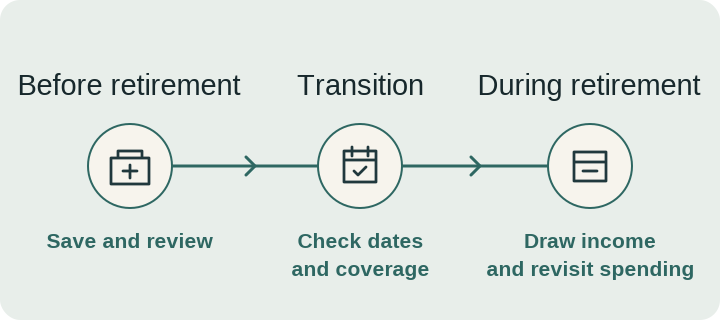
Separate the years of saving from the years of drawing income
Start with two dates. The first is when employment income might fall or stop. The second is when you expect to begin using a particular benefit or account. There can be months or years between those dates, and members of a household can be on different schedules. Mark each date as confirmed or tentative so that a decision about work, benefits, or coverage can be updated without rebuilding the plan.
During the saving years, look at what you can contribute, what your employer plan offers, and which expenses compete for the same cash. Near retirement, shift the focus to monthly spending, the sources that can cover it, and how you would pay bills if a source is delayed. The transition may involve reduced hours or a change in health coverage before a benefit begins.
Map possible income to the expenses it would cover
List the income sources that actually apply to your household. These might include Social Security, an employer pension, retirement account withdrawals, taxable savings, work, or net rental income. For each one, record the expected start date, likely payment pattern, any eligibility conditions, and the document or provider behind the estimate. Note whether it can change with markets, rent vacancies, work hours, or a partner’s death.
Next, group spending into essentials such as housing and food, flexible spending such as travel, and irregular costs such as repairs. Match amounts on the same basis. For example, compare what is available after taxes and deductions with the bills you expect to pay. When a source is variable, consider which expenses you could defer and which would still come due.
Give inflation, health care, and uncertainty their own space
Compare expenses using a consistent set of dollars. A bill based on today’s price and income estimated in future dollars can give a misleading picture when put side by side. Flag categories with room to change, such as insurance premiums, out-of-pocket health expenses, and home maintenance.
Write down where health coverage would come from during each transition. Include premiums and spending you may owe even with coverage. A plan can also account for a period of caregiving, an earlier end to work, a change in housing, or a longer retirement than expected. For each scenario, note the expense or income source affected and the decision you could revisit.
Make room for federal and state taxes when comparing spendable amounts. The tax records guide can help you collect documents and turn a potential withdrawal or move into a question for a tax professional.
Ask what changes across accounts and withdrawal approaches
For each workplace plan, individual retirement account, or taxable account, record who owns it, what it holds, which fees apply, and how to request money. A withdrawal may have different tax consequences or timing constraints depending on the account and your circumstances. Check the plan documents and ask what could change if you transfer or consolidate an account.
A regular draw can make budgeting easier. A flexible draw can make it easier to adjust after a large expense or market decline. Both approaches need a way to handle essential bills when investments lose value or income is delayed. Ask how taxes, administrative requirements, and the timing of sales would affect the amount available. If someone else depends on this income, ask what would happen to benefits and account access if an owner died.
Retirement planning checklist
Gather these records before choosing a date or changing how you draw income. Use summaries for discussion and keep original statements in a secure place.
- Expected work changes, benefit start dates, and health coverage dates for each member of the household.
- Recent spending totals, separated into essential, flexible, and irregular expenses.
- Benefit estimates and pension documents, with the assumptions and date of each estimate.
- Account statements, fees, ownership, and beneficiary information.
- Insurance coverage, premiums, gaps, and likely out-of-pocket costs.
- Recent tax returns and a list of questions about withdrawals, relocation, or household changes.
- A short list of events that would prompt a review, such as a job change, large bill, or delayed payment.
Retirement planning questions
Why can’t one savings target fit everyone?
Housing, health expenses, benefit eligibility, household obligations, and retirement length can differ widely. The same account balance can cover very different spending gaps. A target becomes more informative when you connect it to the expenses and other income sources it is meant to support.
What if I have several possible retirement dates?
Put two or three dates on paper and compare when pay, insurance, and benefits change in each case. Note when you would first need money from savings and whether a gap depends on an uncertain source.
How do I handle a benefit that is still an estimate?
Keep the estimate and its date, then ask the provider what would affect the amount or payment start. Write down how you would cover essential costs if the actual payment is smaller or later.
How often should I update the checklist?
Revisit it when work, health, family responsibilities, income, or expenses change. Pick a regular reminder that suits your planning needs so old statements and estimates are easy to spot.
When might professional help be useful?
A qualified professional may help compare choices that are difficult to reverse, such as a pension payment election, an account transfer, or a large withdrawal. Ask what the professional is qualified to advise on, how they are paid, and whether a separate tax or legal specialist is needed.
Continue with investing basics or read the financial education disclaimer.